Buildings are designed to provide safe and stable living and working environments. However, continuous exposure to weather conditions, ageing materials, water seepage, poor maintenance and environmental factors can gradually affect their structural condition. Over time, these issues may develop into serious building structural problems if they are not identified and addressed properly.
For residential societies, commercial properties and industrial buildings, recognising the early warning signs of structural damage is essential. Small cracks, falling concrete, exposed reinforcement and persistent water leakage may indicate underlying deterioration that requires professional evaluation.
Ignoring these warning signs can lead to expensive repairs, reduced structural durability and potential safety concerns. Regular building inspections and professional structural assessments help identify problems before they become more severe.
In this blog, we explore 10 important warning signs that indicate your building may need immediate structural attention and explain why professional inspection is essential.
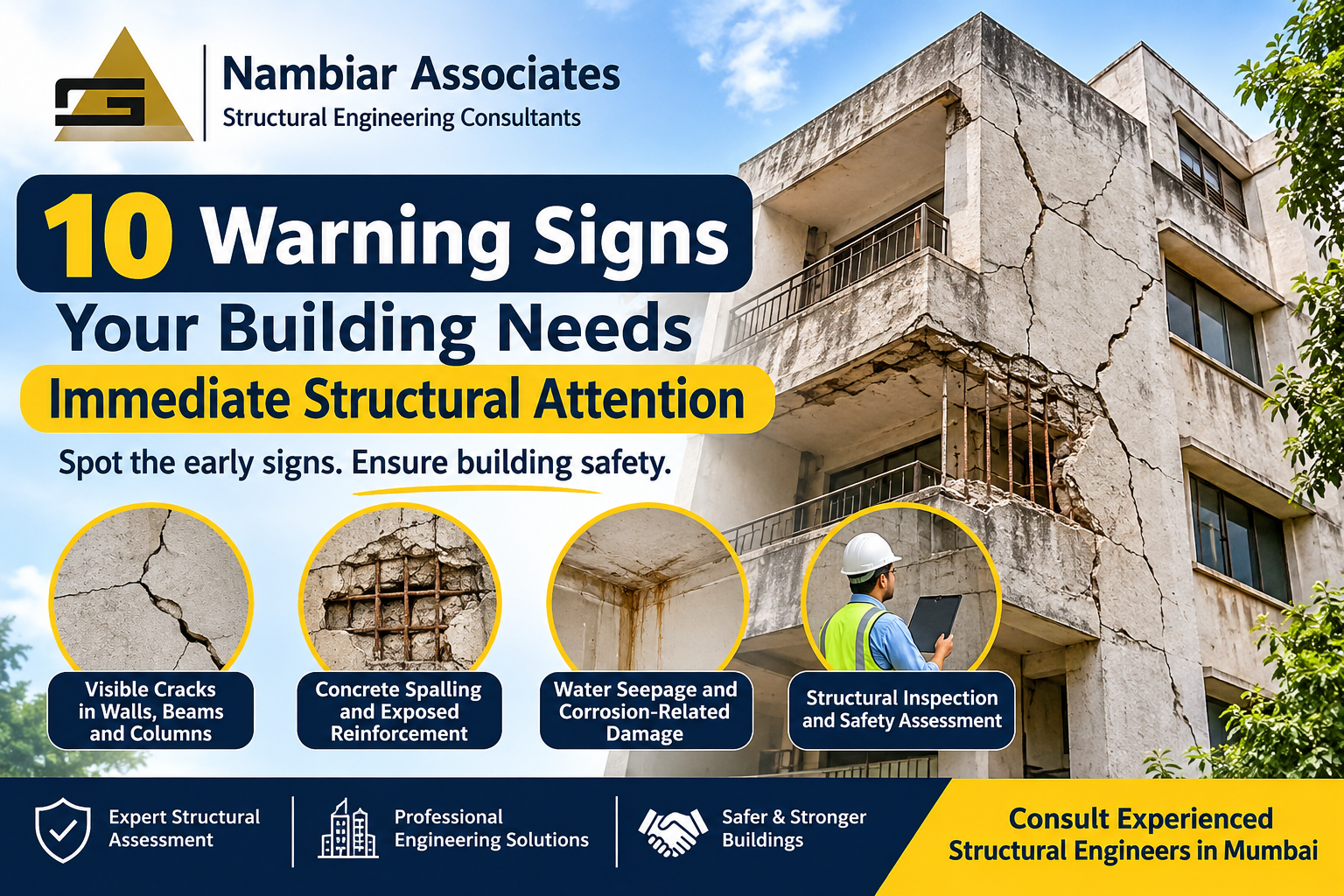
1. Visible Cracks in Walls, Beams and Columns
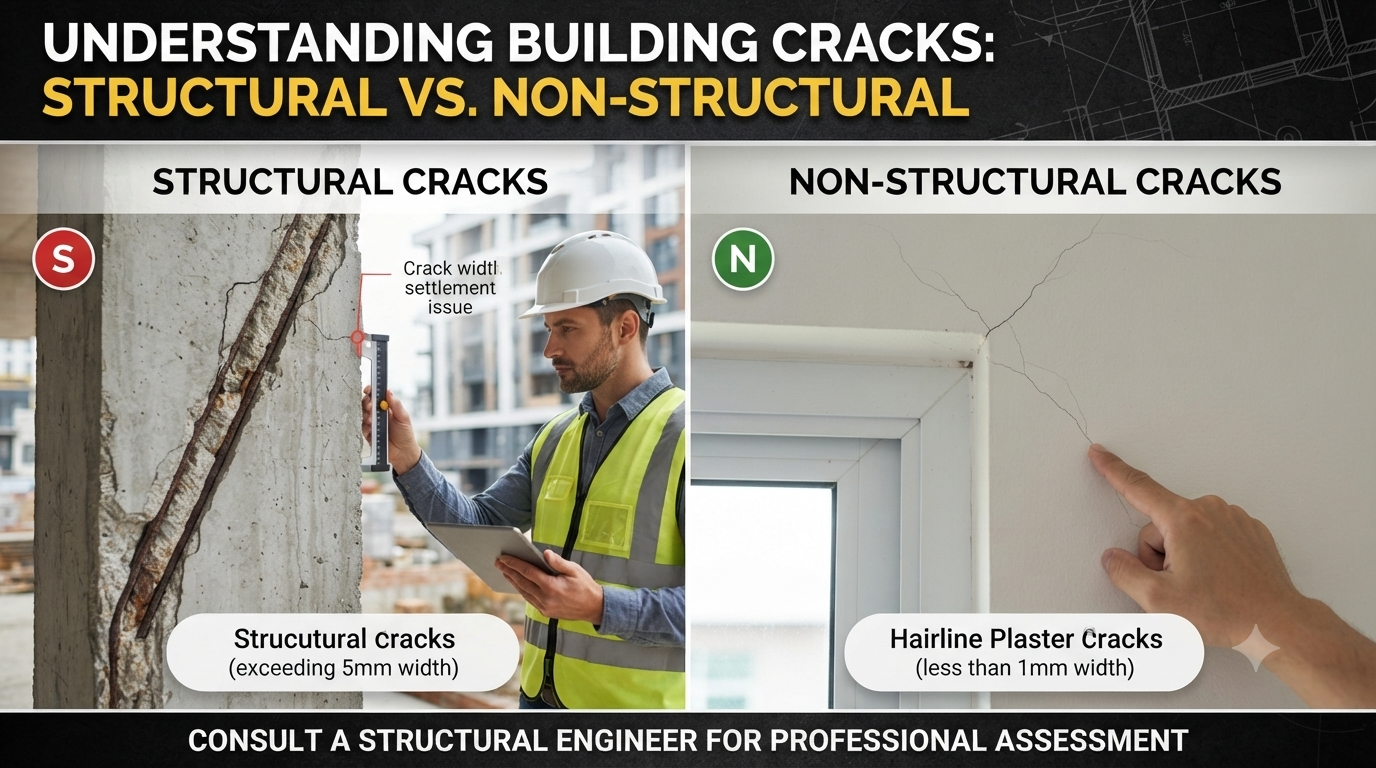
Cracks are among the most noticeable signs of potential structural problems in buildings. While some minor cracks may occur due to plaster shrinkage or temperature changes, others can indicate movement, settlement or deterioration of structural elements.
Cracks appearing in load-bearing walls, RCC beams, columns and slabs should never be ignored without proper assessment.
Common types of cracks to watch for include:
- Diagonal cracks near doors and windows.
- Vertical or horizontal cracks in walls.
- Cracks appearing along beams and columns.
- Wide or continuously expanding cracks.
- Cracks accompanied by uneven floors or visible deformation.
The location, width, direction and pattern of cracks help structural engineers understand their possible causes. However, visual observation alone cannot establish whether a crack is structural or non-structural.
If you notice unusual or growing cracks, consult qualified structural engineers for a detailed assessment.
2. Concrete Spalling and Exposed Reinforcement
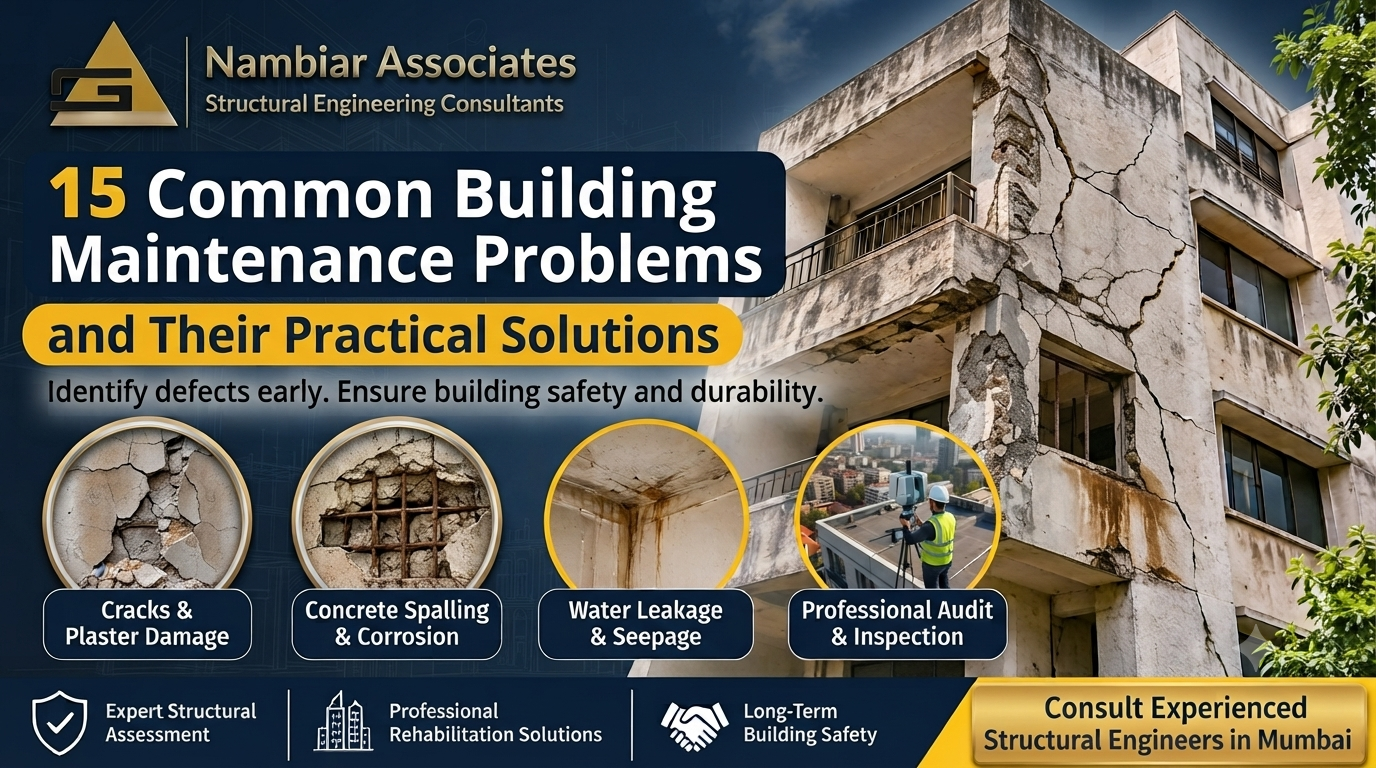
Concrete spalling occurs when portions of concrete break, loosen or detach from a structural surface. This condition is commonly observed in ageing buildings, particularly in exposed RCC elements such as columns, beams, balconies and slabs.
When concrete cover deteriorates, the internal steel reinforcement may become exposed to moisture and environmental conditions.
Common warning signs include:
- Pieces of concrete falling from ceilings or balconies.
- Concrete surfaces becoming hollow or loose.
- Rust stains appearing on concrete surfaces.
- Visible steel reinforcement bars.
- Crumbling or deteriorating concrete around columns and beams.
Exposed reinforcement can develop corrosion, reducing the durability of the structural element and potentially affecting its load-carrying capacity.
Professional concrete testing and structural assessment can help determine the extent of deterioration and identify suitable repair or rehabilitation measures.
3. Water Seepage and Corrosion-Related Damage
Water seepage is a common problem in residential and commercial buildings. Although it may initially appear to be a waterproofing issue, persistent moisture can contribute to concrete deterioration and reinforcement corrosion.
Water entering through roofs, external walls, balconies, terraces and plumbing systems can gradually damage building materials.
Look for these signs:
- Damp patches on walls and ceilings.
- Water leakage around balconies and windows.
- Rust-coloured stains on concrete.
- Peeling paint and damaged plaster.
- Persistent moisture around beams and columns.
When water reaches the steel reinforcement inside RCC structures, corrosion may develop. As reinforcement corrodes, expansion of rust products can create internal pressure, resulting in concrete cracking and spalling.
A professional structural inspection can help identify whether seepage has affected only the surface finishes or has contributed to deeper structural deterioration.
4. Uneven Floors and Visible Structural Settlement
Uneven floors, sloping surfaces and noticeable changes in floor levels may indicate possible foundation settlement or structural movement.
Although certain irregularities may result from construction workmanship, sudden or progressive changes require professional investigation.
Warning signs include:
- Floors becoming noticeably sloped.
- New gaps appearing between walls and floors.
- Doors and windows becoming difficult to open.
- Cracks developing near the foundation or lower floors.
- Visible changes in the alignment of structural elements.
Differential settlement occurs when different portions of a building move or settle by unequal amounts. Depending on its cause and severity, it can create additional stresses in the building structure.
A qualified structural engineer can evaluate the building's condition and recommend further investigation where necessary.
5. Rusting of Steel Reinforcement and Structural Components
Corrosion of steel reinforcement is a significant durability concern in reinforced cement concrete buildings.
Moisture, carbonation, chloride exposure and inadequate concrete cover can contribute to reinforcement corrosion.
Common signs of corrosion include:
- Rust marks on concrete surfaces.
- Cracks running along reinforcement locations.
- Exposed and corroded steel bars.
- Concrete breaking away from structural members.
- Deterioration around balconies, slabs and columns.
If corrosion progresses, it may reduce the effective cross-sectional area of reinforcement and affect the performance of structural components.
Professional testing methods, including half-cell potential testing and other suitable non-destructive testing techniques, can help investigate reinforcement corrosion and assess the condition of concrete structures.
6. Repeated Cracks After Previous Repairs
Have you noticed cracks returning even after repainting, plastering or repairing the affected areas?
Repeated cracks may indicate that the underlying cause has not been properly identified or addressed.
Surface-level repairs can improve the appearance of walls, but they may not resolve issues related to structural movement, settlement, reinforcement corrosion or other deterioration mechanisms.
Pay attention to:
- Cracks reappearing in previously repaired locations.
- Cracks becoming wider over time.
- New cracks developing near repaired areas.
- Repeated plaster damage around beams and columns.
- Cracks accompanied by water seepage.
Before carrying out another repair, it is important to identify the root cause. A professional structural assessment can help determine whether additional investigation, structural strengthening or suitable repair measures are required.
7. Falling Concrete from Balconies, Ceilings and Slabs
Falling concrete is a serious warning sign that requires immediate attention, particularly in occupied residential and commercial buildings.
Concrete fragments falling from balconies, ceilings, chajjas and slab edges can create risks for residents, visitors and pedestrians.
This condition may result from reinforcement corrosion, inadequate concrete cover, moisture penetration or long-term deterioration.
If concrete is loose or falling:
- Restrict access to the affected area.
- Keep residents and pedestrians away from the danger zone.
- Avoid attempting repairs without professional assessment.
- Arrange an urgent inspection by a qualified structural engineer.
If there is a risk of further falling material or structural instability, follow emergency safety instructions and contact the appropriate authorities.
8. Unusual Deflection or Bending of Beams and Slabs
Beams and slabs are important structural elements that transfer building loads safely to supporting columns and foundations.
Visible sagging, excessive deflection or unusual deformation may indicate structural distress, overloading, deterioration or design and construction-related issues.
Potential warning signs include:
- Noticeable bending in RCC beams.
- Sagging ceilings or slabs.
- Cracks developing near beam-column connections.
- Changes in the level of structural surfaces.
- Unusual deformation compared with surrounding areas.
Not every visible irregularity indicates structural failure. However, unusual or progressive deformation should be investigated promptly by an experienced structural engineer.
9. Unusual Noises and Movement in Structural Elements
Cracking sounds, unusual vibrations or noticeable movement in building components should not be dismissed, particularly when they occur alongside visible cracks or deformation.
These symptoms may be associated with structural movement, loose components, deterioration or other building-related issues.
Possible warning signs include:
- Repeated cracking or popping sounds.
- Noticeable movement in certain building components.
- Unusual vibrations in floors or slabs.
- Doors and windows suddenly becoming misaligned.
- New cracks appearing alongside movement.
The cause cannot be established through sound or observation alone. A professional inspection is necessary to determine whether the issue is structural or related to non-structural building components.
10. Ageing Building Condition and Lack of Regular Structural Inspection
Older buildings require proper maintenance and periodic evaluation to monitor their condition. Over time, concrete deterioration, reinforcement corrosion, water penetration and changes in building usage can affect structural performance.
A building that has not undergone a professional structural inspection for several years may have hidden defects that are not immediately visible.
Housing societies, property owners and facility managers should consider professional structural assessments when:
- The building shows signs of ageing and deterioration.
- Multiple repair issues are developing simultaneously.
- Previous repairs have not resolved recurring problems.
- Concrete damage or reinforcement corrosion is visible.
- The building is being considered for major repairs or redevelopment.
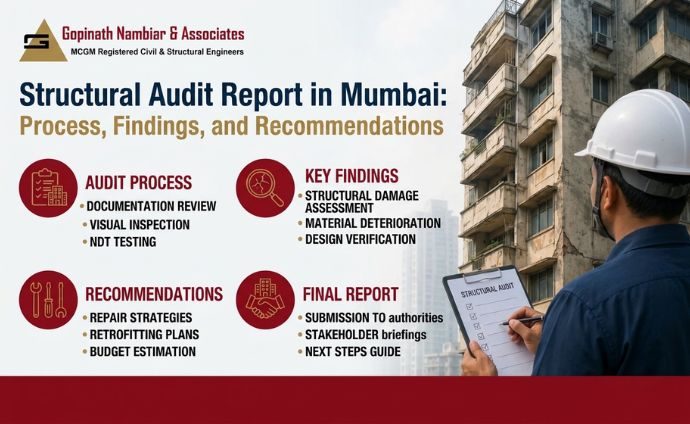
A professional structural audit helps evaluate the building's present condition, identify potential defects and recommend appropriate maintenance or rehabilitation measures.
Why Professional Structural Inspection Is Important
Identifying visible damage is only the first step towards ensuring building safety. Many structural defects develop inside concrete elements and may not be noticeable through ordinary visual inspection.
A professional structural inspection combines visual assessment, engineering evaluation and suitable testing methods to understand the condition of a building.
Depending on the building's condition, structural engineers may recommend:
- Detailed visual inspection of structural elements.
- Crack mapping and documentation.
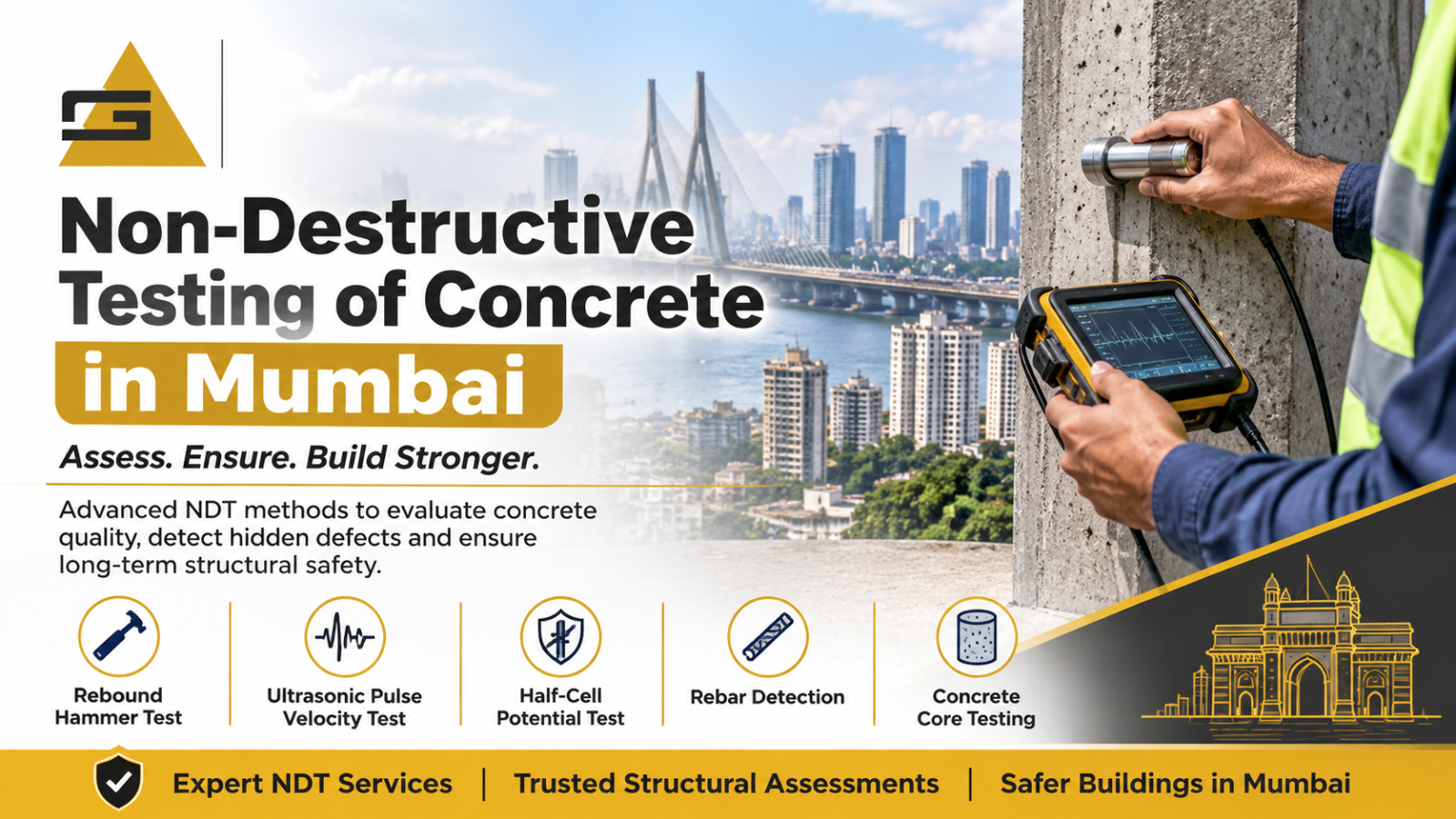
- Rebound hammer testing for assessing surface hardness.
- Ultrasonic Pulse Velocity (UPV) testing to evaluate concrete quality and uniformity.
- Half-cell potential testing to investigate reinforcement corrosion.
- Concrete core testing where required.
- Structural analysis and safety assessment.
These methods form part of Non-Destructive Testing of Concrete, which helps investigate concrete properties and potential defects without unnecessarily damaging the structure.
Read more about Structural Audit and NDT Testing Services to understand how professional testing supports building condition assessments.
How Regular Building Maintenance Helps Prevent Structural Deterioration
Preventive maintenance plays an important role in protecting buildings against long-term deterioration. Addressing minor defects at an early stage can help reduce the possibility of more extensive damage.
Building owners and housing societies should establish a maintenance plan that includes:
- Periodic inspection of walls, columns, beams and slabs.
- Timely identification of water leakage and seepage.
- Monitoring of visible cracks and concrete deterioration.
- Repair of damaged concrete using appropriate methods.
- Inspection of terraces, balconies and external building surfaces.
- Professional structural evaluation whenever warning signs appear.
For buildings with significant deterioration, a structural engineer may recommend specialised repair, rehabilitation or strengthening solutions.
You can also explore professional Structural Engineering Services to understand the role of engineering expertise in evaluating and maintaining building safety.
When Should You Contact a Structural Engineer?
You should arrange a professional structural inspection when you observe significant or progressive cracks, exposed reinforcement, falling concrete, unusual structural deformation or repeated damage after previous repairs.
Do not wait for visible problems to become severe. Early evaluation helps determine the nature of the defect and the appropriate corrective measures.
For housing societies planning major repairs, structural rehabilitation or redevelopment, a detailed structural assessment can also provide important technical information for future decisions.
Gopinath Nambiar & Associates provides structural engineering consultancy services in Mumbai, including structural audits, NDT testing, building repairs, rehabilitation, structural strengthening and Project Management Consultancy (PMC).
With 35+ years of experience, the consultancy supports residential societies, commercial property owners and developers in understanding building conditions and identifying appropriate engineering solutions.
For professional guidance, visit Structural Engineering Consultancy Services in Mumbai.
Frequently Asked Questions (FAQs)
1. What are the common signs of structural damage in a building?
Common signs include wide or growing cracks, concrete spalling, exposed reinforcement, rust stains, water seepage, uneven floors, sagging slabs and unusual structural deformation.
2. Are cracks in building walls always a sign of structural problems?
No. Some cracks are caused by plaster shrinkage, temperature changes or minor settlement. However, cracks in beams, columns, load-bearing walls or cracks that continue to widen should be professionally assessed.
3. How can I identify concrete deterioration in an old building?
Look for hollow or loose concrete, exposed reinforcement, rust stains, surface cracks, falling concrete fragments and persistent dampness. A professional inspection and appropriate concrete testing can help determine the extent of deterioration.
4. What is the role of NDT testing in structural inspection?
Non-Destructive Testing (NDT) helps engineers investigate concrete properties and potential defects without causing significant damage to structural elements. Common methods include rebound hammer testing, ultrasonic pulse velocity testing and half-cell potential testing.
5. When should a building undergo a structural audit?
A building should undergo a structural audit when there are visible signs of deterioration, recurring structural defects, significant ageing or concerns about its safety. Housing societies should also follow applicable local authority requirements and recommendations from qualified structural professionals.
Conclusion
Structural deterioration often develops gradually, and early warning signs should never be ignored. Cracks in walls, concrete spalling, exposed reinforcement, water seepage and unusual deformation can indicate problems that require professional investigation.
Regular maintenance, timely inspections and appropriate structural assessments help building owners and housing societies make informed decisions about repairs and long-term building safety.
If your building is showing any of these warning signs, consult experienced structural engineers to understand the condition of the structure and determine the next steps.
Gopinath Nambiar & Associates offers professional structural engineering consultancy, structural audits and NDT testing services in Mumbai to support safer and more durable buildings.