
Concrete is one of the most widely used construction materials in the world; you see it all over, from homes and office buildings to bridges, factories, dams, and other infrastructure projects. Even if concrete is very strong and built to last, it can still end up forming cracks, creating voids, causing corrosion, and various other hidden problems as time goes on. Sometimes these things don’t show up right away on the surface, but they can mess with the safety as well as the performance of a structure.
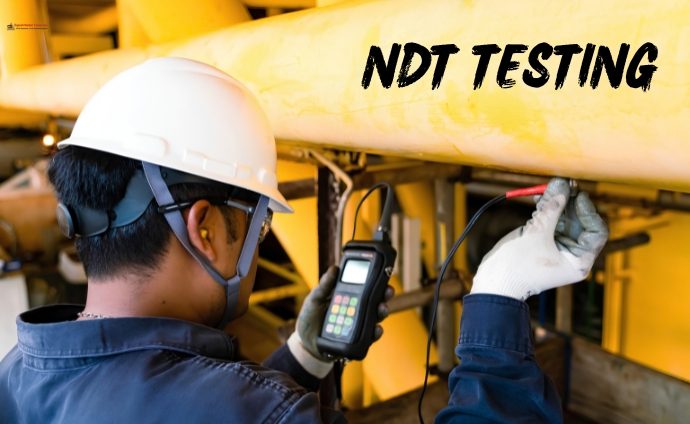
So, that’s where non destructive testing of concrete starts to matter, because it’s a pretty big part of modern construction and maintenance. With this approach, engineers can inspect the condition of the concrete without actually damaging the structure itself.
In this guide, you’ll also learn what non-destructive testing of concrete really means, why it matters, which common inspection methods are used, and how professional non-destructive testing (NDT) services support structural integrity.
What Is Non-Destructive Testing of Concrete?
Non-destructive testing of concrete (NDT) is like a set of testing methods that are used to check the strength, quality, and general condition of concrete without having to cut, drill, or mess up the structure.
Unlike destructive testing, which normally requires that samples be removed from the structure, NDT approaches basically look at the concrete while it stays where it is, in place, and whole. Because of this, the process often feels faster, safer, and generally more budget-friendly.
Engineers apply NDT for both brand-new and older structures, and it helps them spot hidden defects that you would not notice during a simple visual inspection, or well, even when you think you have looked carefully.
Why Is Non-Destructive Testing of Concrete Important?
Structural safety really comes down to knowing what the building, infrastructure, or that whole thing is actually like in real life. You need the proper condition.
Non-Destructive testing of concrete helps engineers:
- Detect hidden cracks and voids
- Evaluate concrete quality
- Check structural strength
- Identify areas affected by corrosion
- Plan repairs before major damage occurs
- Improve building safety
- Extend the service life of structures
When Is Concrete NDT Required?
Concrete testing is useful in many situations, including
- Before purchasing a building
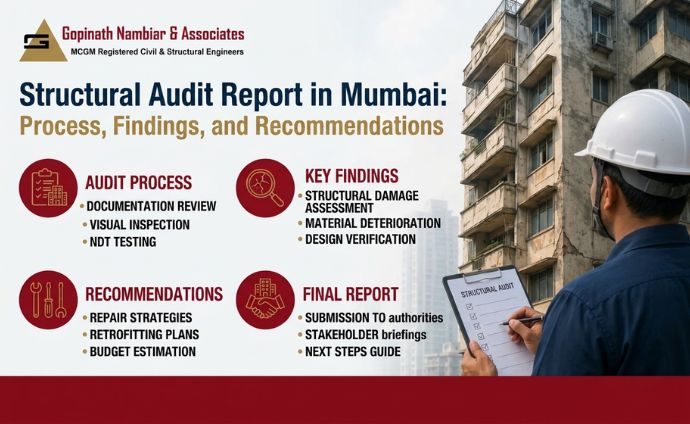
- During structural audits
- After earthquakes or floods
- Before renovation projects
- During bridge inspections
- For aging buildings
- Before increasing building loads
- During quality control of new construction
These inspections provide valuable information about the health of the structure.
Common Methods of Non-Destructive Testing of Concrete
Different NDT methods are used depending on the inspection requirements.
Rebound Hammer Test
The rebound hammer test estimates the surface hardness of concrete.
It is commonly used for:
- Preliminary strength assessment
- Quality comparison
- Uniformity evaluation
Although simple, it is usually combined with other testing methods for more reliable results.
Ultrasonic Pulse Velocity (UPV) Test
The UPV test sends ultrasonic waves through concrete to measure their travel time.
It helps identify:
- Internal cracks
- Voids
- Honeycombing
- Concrete quality
- Uniformity
This is one of the most widely used nondestructive testing methods for concrete.
Cover Meter Survey
A cover meter detects the position and depth of reinforcing steel bars inside concrete.
It helps engineers:
- Locate reinforcement
- Measure concrete cover
- Plan drilling safely
- Assess reinforcement placement
Ground Penetrating Radar (GPR)
Ground-penetrating radar uses electromagnetic waves to scan inside concrete structures.
It helps detect:
- Reinforcement
- Embedded utilities
- Voids
- Delamination
- Thickness variations
GPR provides detailed internal information without damaging the concrete.
Benefits of Non-Destructive Testing NDT Services
Professional Non-Destructive Testing NDT Services provide several important advantages.
These include:
- No damage to the structure
- Fast inspection process
- Reliable evaluation
- Lower repair costs
- Early defect detection
- Improved maintenance planning
- Increased structural safety
- Reduced project downtime
Professional testing also provides documented reports that support engineering decisions.
Industries That Use Non-Destructive Testing NDT Services
Many industries rely on Non-Destructive Testing (NDT) services for regular inspections.
These include:
- Residential construction
- Commercial buildings
- Industrial plants
- Bridges
- Highways
- Airports
- Hospitals
- Educational institutions
- Power plants
- Water treatment facilities
Regular testing helps maintain safety and compliance across these sectors.
Signs That a Building May Need Concrete Testing
A structural inspection may be necessary if you notice:
- Large wall cracks
- Water leakage
- Concrete spalling
- Rust stains
- Uneven floors
- Foundation settlement
- Exposed reinforcement
- Structural vibration
Choosing Professional Non-Destructive Testing NDT Services
When selecting an inspection company, consider:
- Qualified structural engineers
- Experience with concrete testing
- Modern testing equipment
- Detailed inspection reports
- Knowledge of industry standards
- Timely project completion
- Good client reviews
Best Practices for Structural Safety
Maintaining structural safety requires more than one inspection.
Property owners should:
- Schedule regular structural assessments.
- Repair cracks promptly.
- Monitor water leakage.
- Maintain waterproofing systems.
- Conduct periodic Non-Destructive Testing of concrete.
- Keep maintenance records updated.
- Follow professional engineering recommendations.
Preventive maintenance is always more economical than major structural repairs.
Future of Non-Destructive Testing
Modern technology continues to improve concrete inspection methods.
Today's Non-Destructive Testing NDT services increasingly use:
- Digital data collection
- Advanced imaging systems
- Automated scanning equipment
- AI-assisted data analysis
- Cloud-based reporting
These innovations improve testing accuracy while reducing inspection time.
Conclusion
Non-destructive testing of concrete plays a big role in keeping structural safety in check, supporting upkeep planning, and stretching the life of buildings and other infrastructure. When you can spot hidden defects early, before they turn into big issues, NDT tends to help property owners dodge expensive repairs, and it also backs up occupant safety.
Whether you run residential buildings, commercial facilities, industrial sites, or public works, putting money into professional non-destructive testing (NDT services) is a smart move. Regular checkups, better evaluations, and prompt maintenance not only safeguard your investment, but they also help your structures stay sound, trustworthy, and compliant for years and years.
FAQs
Q1. What is nondestructive testing of concrete?
Non-destructive testing for concrete is basically a way of checking its state, compressive strength, and overall quality, without having to damage the structure at all, not even a little, you know.
Q2. Why is concrete NDT so important?
It helps reveal hidden flaws, increases structural safety, supports maintenance scheduling, and basically stretches the service life of buildings and infrastructure.
Q3. What are the most common concrete NDT methods?
The common go-to choices are something like the Rebound Hammer Test, Ultrasonic Pulse Velocity (UPV), Ground Penetrating Radar (GPR), Cover Meter Survey, and the Half-Cell Potential Test.
Q4. When should a building undergo concrete testing?
Testing is suggested for old, aging buildings; structural audits; renovations; inspections after disaster events; project quality control; and whenever any structural worries are spotted or suspected.
Q5. Why should I hire professional Non-Destructive Testing (NDT) services?
Because professional Non-Destructive Testing NDT services bring specialized tools, experienced engineers, and repeatable standardized procedures, you get more reliable structural evaluations and practical, dependable recommendations.